
Wildlife Monitoring System
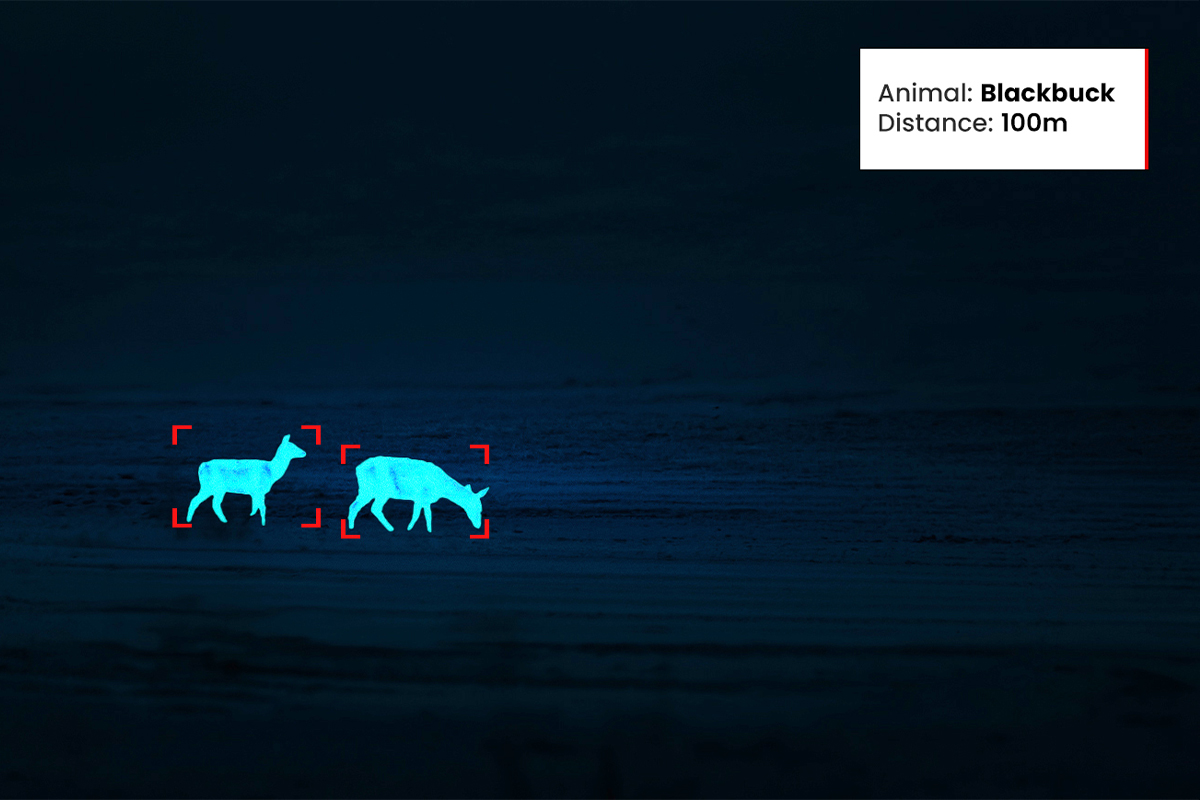
Our Night Wildlife Monitoring System employs advanced deep learning algorithms to identify animals in nighttime environments using thermal camera feeds. This state-of-the-art system is designed for effective and reliable wildlife monitoring, making it ideal for ecological studies, wildlife conservation efforts, and protected area management.
Wildlife Monitoring
Our Night Wildlife Monitoring System employs advanced deep learning algorithms to identify animals in night-time environments using thermal camera feeds. This state-of-the-art system is designed for effective and reliable wildlife monitoring, making it ideal for ecological studies, wildlife conservation efforts, and protected area management.
Key features
- Animal identification
- Thermal camera integration
- Zone-specific monitoring
- AI-Driven analysis
- ROI selection
- Automatic zoom
Enhanced
monitoring
Instant
alarms
Real-time
Minimal
disturbance
Versatile
deployment
Get a Quote
Fill out the form below, and our team will get back to you at the earliest.
Key features:
Animal Identification: Utilizes deep learning algorithms to accurately detect and classify various animal species in thermal imagery, even under challenging nighttime conditions
Thermal Camera Integration: Leverages high-resolution thermal cameras that capture detailed heat signatures, allowing for precise animal detection regardless of lighting.
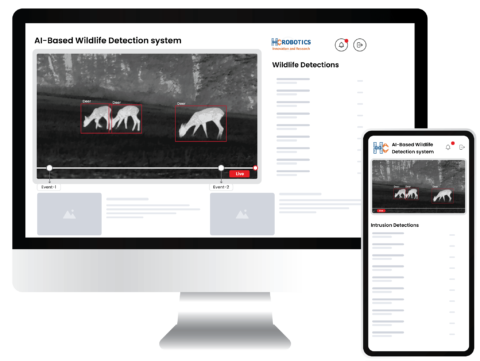
Real-Time Monitoring: Provides continuous surveillance of wildlife activity, offering real-time data and insights for immediate analysis
AI-Driven Analysis: Enhances detection accuracy over time through machine learning, adapting to changes in animal behavior and environmental conditions

Benefits:
Enhanced Wildlife Monitoring: Delivers precise and uninterrupted monitoring of animal movements and behaviors during the night, contributing to more effective conservation strategies
Reduced Human Impact: Minimizes human presence in sensitive ecological areas, reducing stress on wildlife and potential disturbances
Data-Driven Conservation Efforts: Generates valuable data that can be used to inform and improve conservation policies and practices
Versatile Deployment: Suitable for a variety of environments, from dense forests to open reserves, enhancing its applicability across different geographic regions
Scalability: Capable of expanding to cover larger areas or integrating additional sensors as monitoring requirements evolve
Let's Know Your Business Better
Phone Number
Fax
040-4994 86 82
Email